Implementation metapatterns
A few architectures focus on implementation of components:
Plugins#
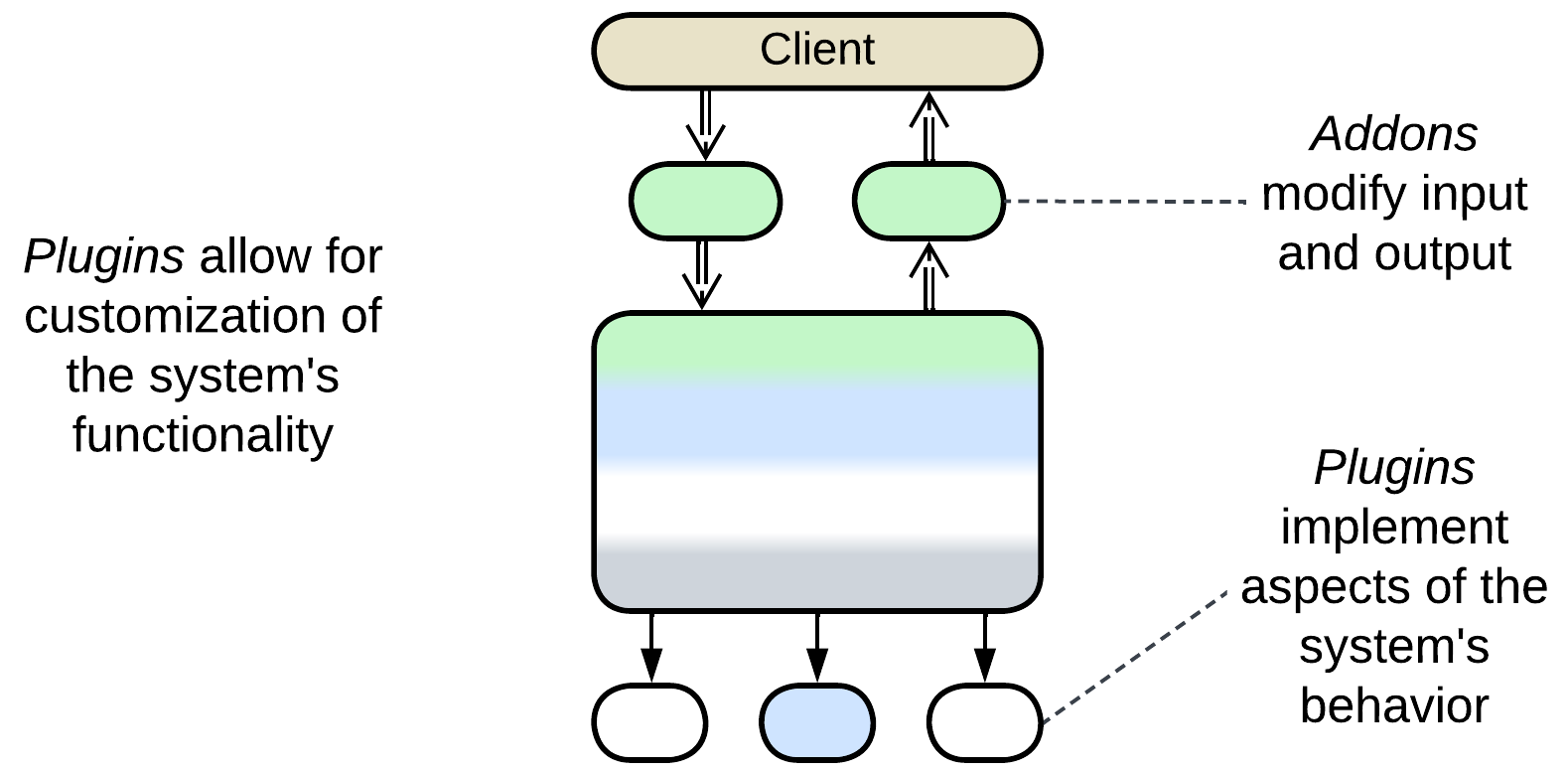
The Plugins family of patterns is about separating a system’s main logic from the customizable details of its behavior. That allows for the same codebase to be used for multiple flavors or customers.
Includes: Plug-In Architecture, Addons, Addins, Strategy, Hooks.
Hexagonal Architecture#
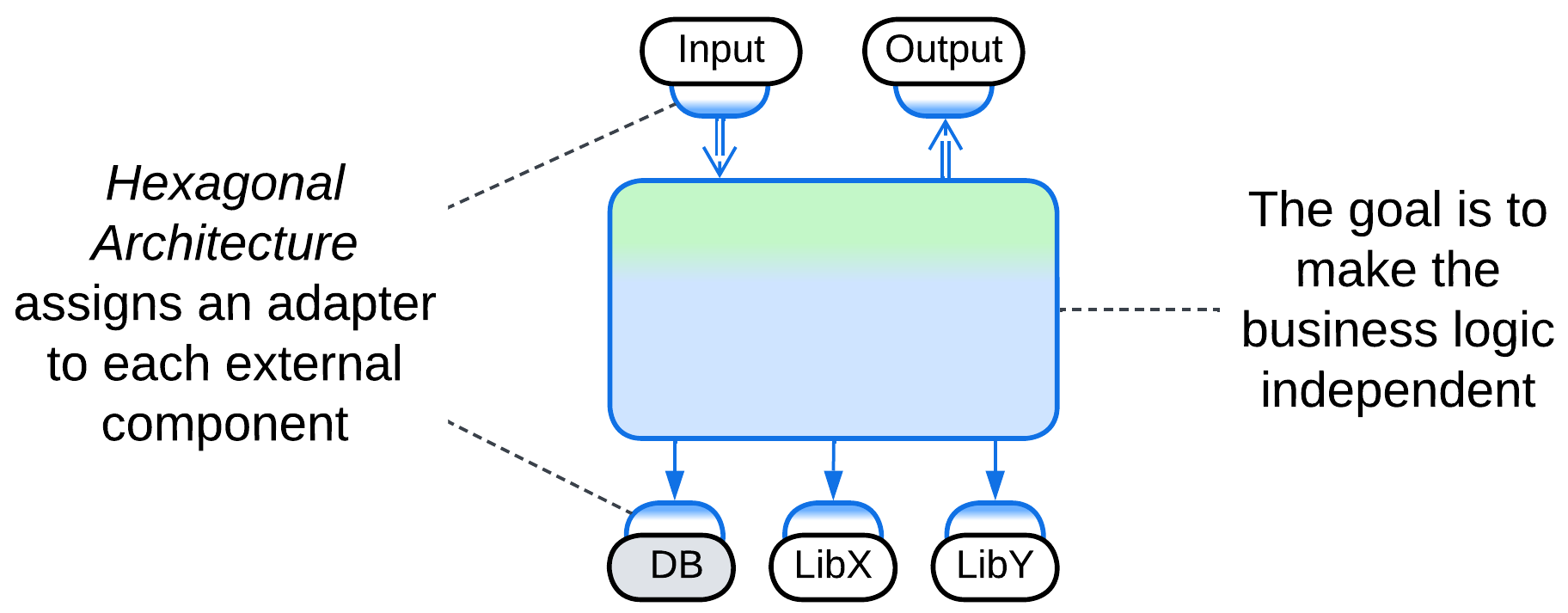
Hexagonal Architecture is a specialization of Plugins where every external dependency is isolated behind an Adapter, making it easy to update or replace third-party components.
Includes: Ports and Adapters, Onion Architecture, and Clean Architecture; Model-View-Presenter (MVP), Model-View-ViewModel (MVVM), Model-View-Controller (MVC), and Action-Domain-Responder (ADR); Pedestal and Cell (Cluster or Domain).
Microkernel#
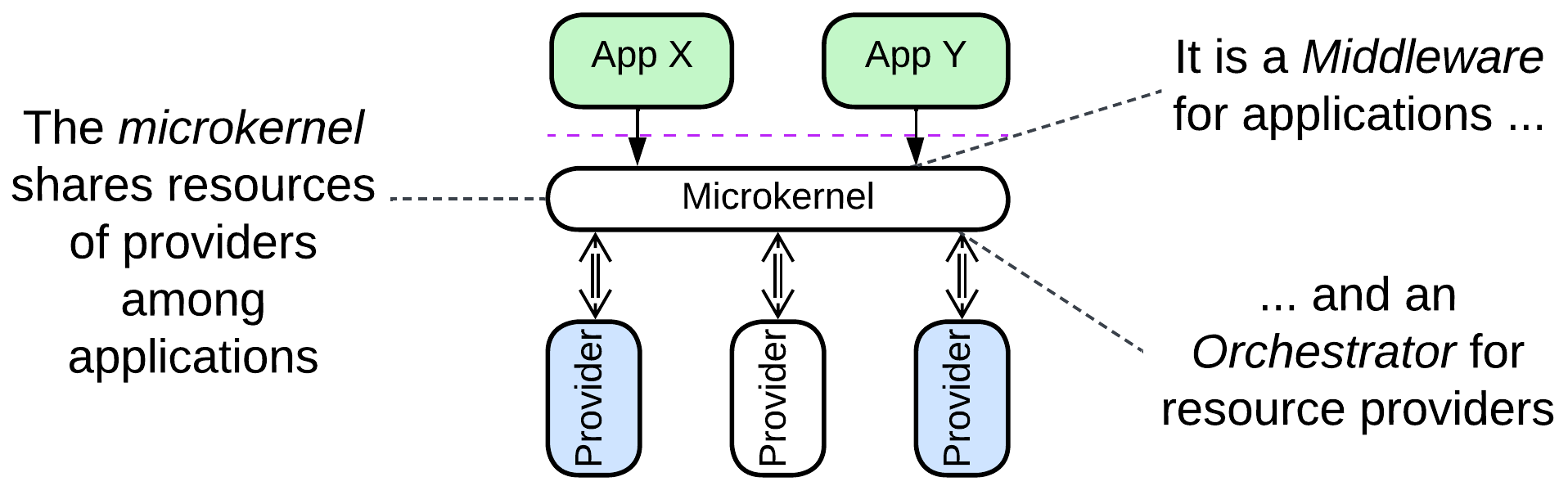
Microkernel is another derivation of Plugins, featuring a rudimentary core component which mediates between resource consumers (applications) and resource providers. The microkernel is a Middleware to the applications and an Orchestrator to the providers.
Includes: operating system, software framework, virtualizer, distributed runtime, interpreter, configuration file, Saga Engine, and AUTOSAR Classic Platform.
Mesh#
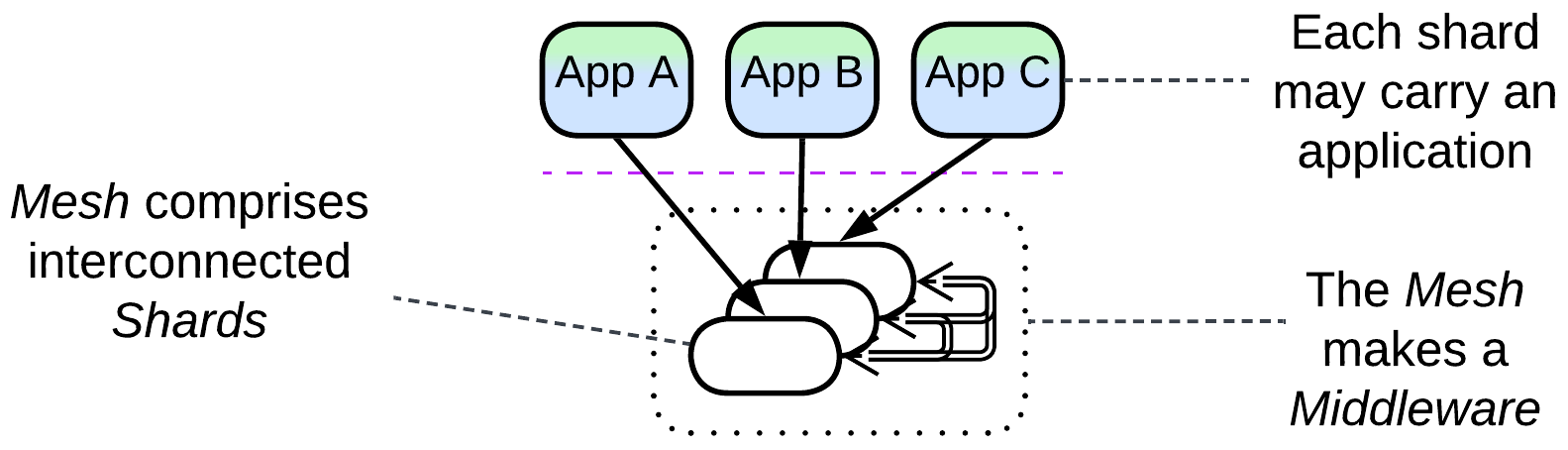
A Mesh consists of intercommunicating shards, each of which may host an application. The shards coalesce into a fault-tolerant distributed Middleware.
Includes: peer-to-peer networks, Leaf-Spine Architecture, Actors, Service Mesh, and Space-Based Architecture.